
Milk that nourishes
A2 beta-casein milk from desi cows, easier on the gut and carrying its full 4–4.5% fat to your glass.

Why we exist
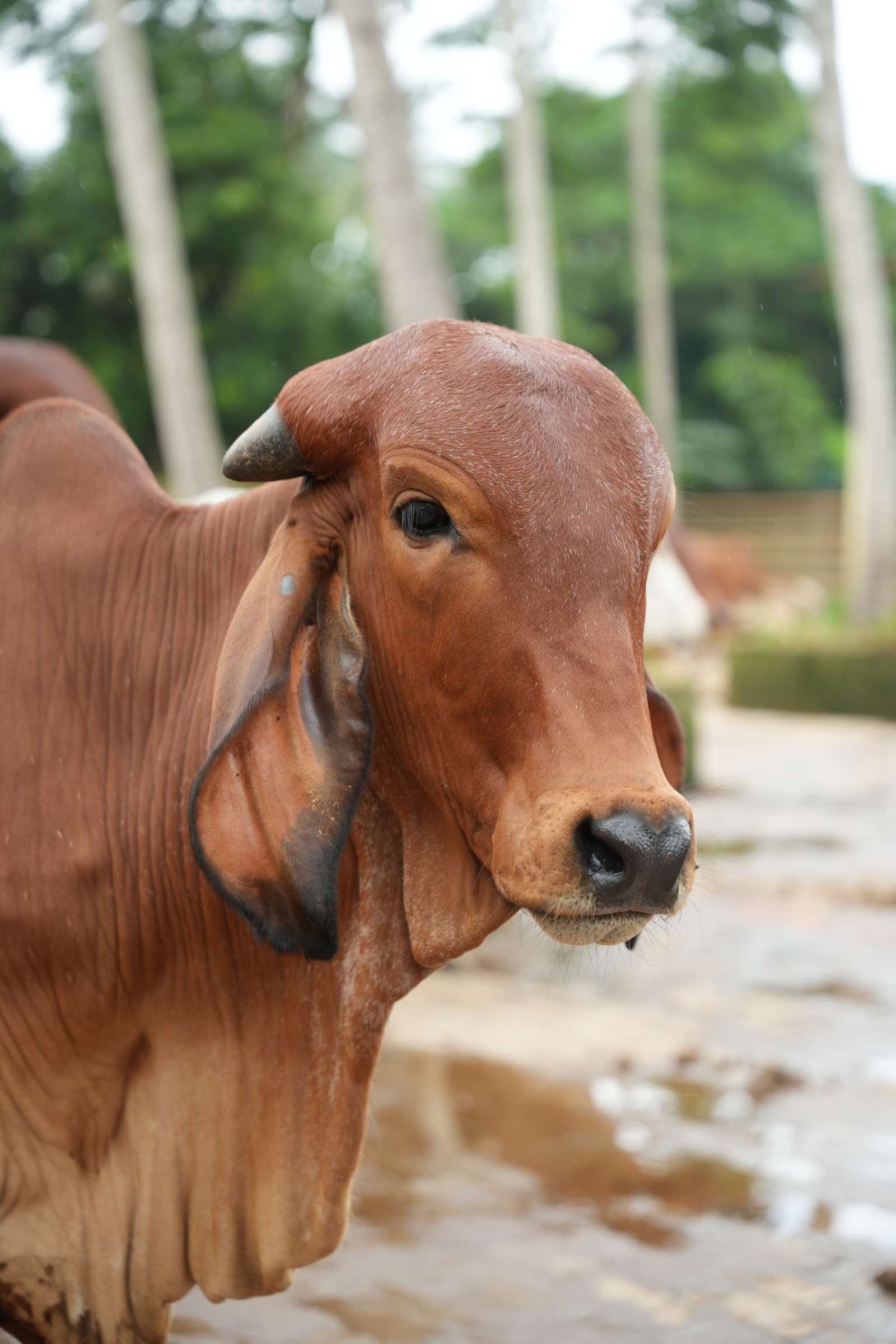
India once had the finest cattle on earth. Over a few decades we traded them away for yield — and got milk that many of us can no longer digest, soil that will not hold water, and villages with nothing left to sell.
Our single objective is to develop and multiply indigenous Indian breeds, and to prove that doing it the traditional way is also the better business. Annapurna Trust runs the goshala; navodita is how its milk reaches your home.
A2 beta-casein milk from desi cows, easier on the gut and carrying its full 4–4.5% fat to your glass.
Fifty partner farmers growing our fodder, local jobs at the shed and the dairy, and an insemination programme that raises the value of every village cow.
Cow slurry becomes organic fertiliser and goes back onto the fields — replacing the chemical inputs that exhausted our land in the first place.


Our journey
Annapurna Trust opens the goshala at Pidhapatana, Delanga, with two indigenous cows and a plan nobody thought would work.
Cyclone-resistant open sheds with concrete floors go up. We begin growing our own corn silage rather than buying feed of unknown origin.
Fifty partner farmers start producing organic fodder across 120 acres. Our artificial insemination programme goes out into Delanga and Pipili.
The insemination programme crosses three thousand farming households — improving village herds, not just our own.
Our own processing unit pasteurises and homogenises on site, so milk goes from udder to doorstep without passing through a single stranger's hands.
Our philosophy
We think of the goshala as one closed system rather than a set of separate jobs. Cows eat fodder we grew ourselves. Their slurry fertilises the field that grows the next crop. Ayurvedic practice keeps them well, so we rarely need to medicate. Nothing chemical enters the loop, and very little leaves it.
It is slower than the industrial way, and it costs more per litre. It also produces milk we are willing to put our own name on.
Beyond our own gate
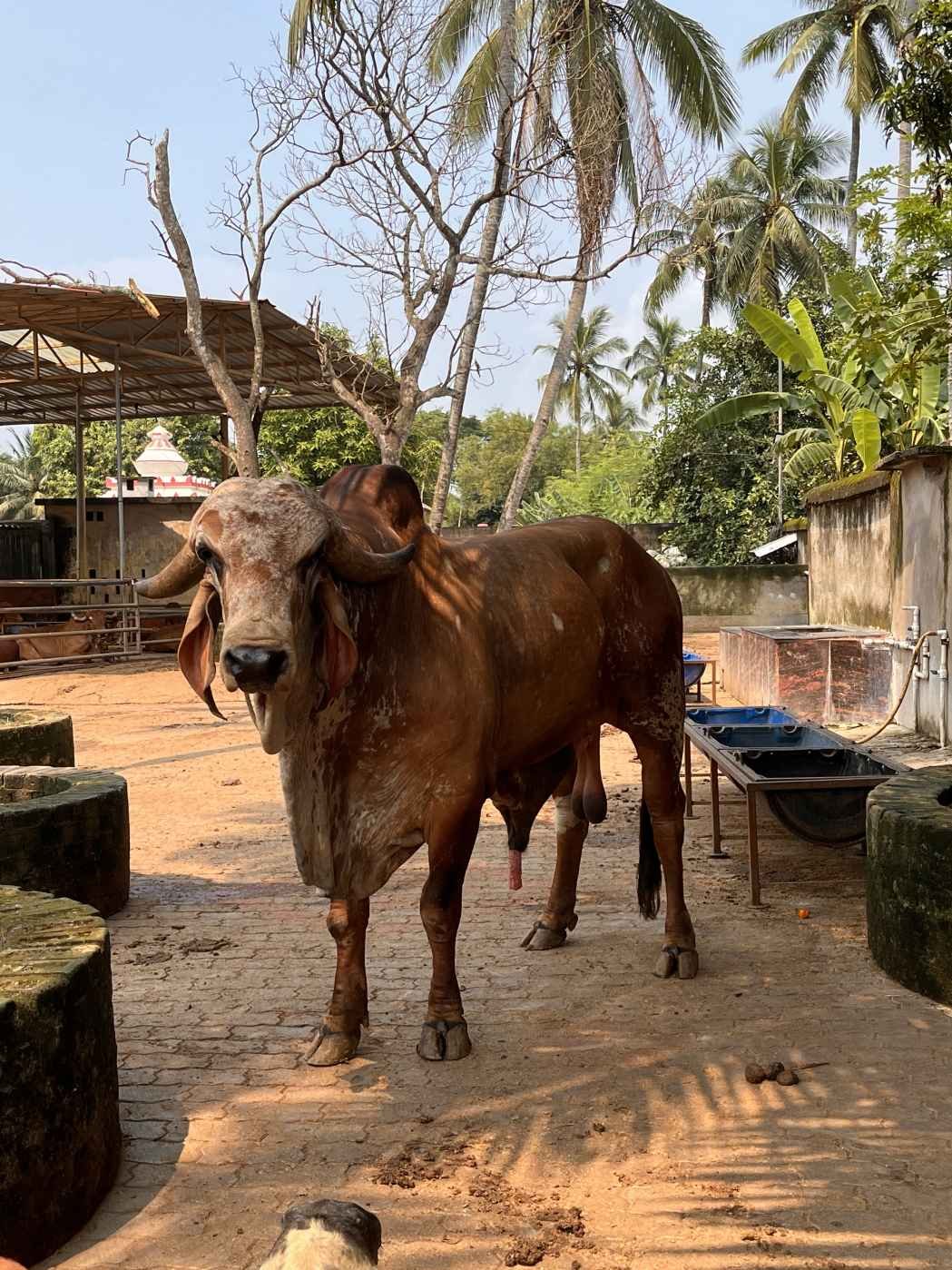
Our artificial insemination programme has reached more than three thousand farming households across Delanga and Pipili. Village cows are bred to superior indigenous bulls — so the next generation in every one of those sheds is a better animal than the last.
It is the cheapest, fastest way we know to rebuild India's desi herd: not by growing one goshala, but by improving three thousand.
Start tomorrow morning
Subscribe and the first bottle arrives between 5 and 9 AM — same fat, same taste, every day.